// structured automation for complex maintenance

Structured, repeatable
automation for legacy migration

Build structured automations around all the required change coming in—CVE patching, triage, review, dependency upgrades, bug fixing, migration.

structured maintenance automation
Structured, repeatable, AI-supported

Work is defined as a task path rather than a prompt. The same automation runs again next quarter and behaves the same way, because the steps and their boundaries are explicit.

Accurate, comprehensible, traceable evidence

Every run records the commands, edits, test results, and retries that produced it. A reviewer can audit the process, not just the diff.

Runs on models and infrastructure you approve

Provider-flexible models inside cloud, on-premise, or air-gapped environments, with secrets, network, and repository access scoped per workflow.

// platform

Run agents in isolated, observable workspaces.

Bosun gives coding agents disposable execution environments with controlled repository access, repeatable setup, bounded secrets, and complete logs for every action.

Sandboxed execution engine
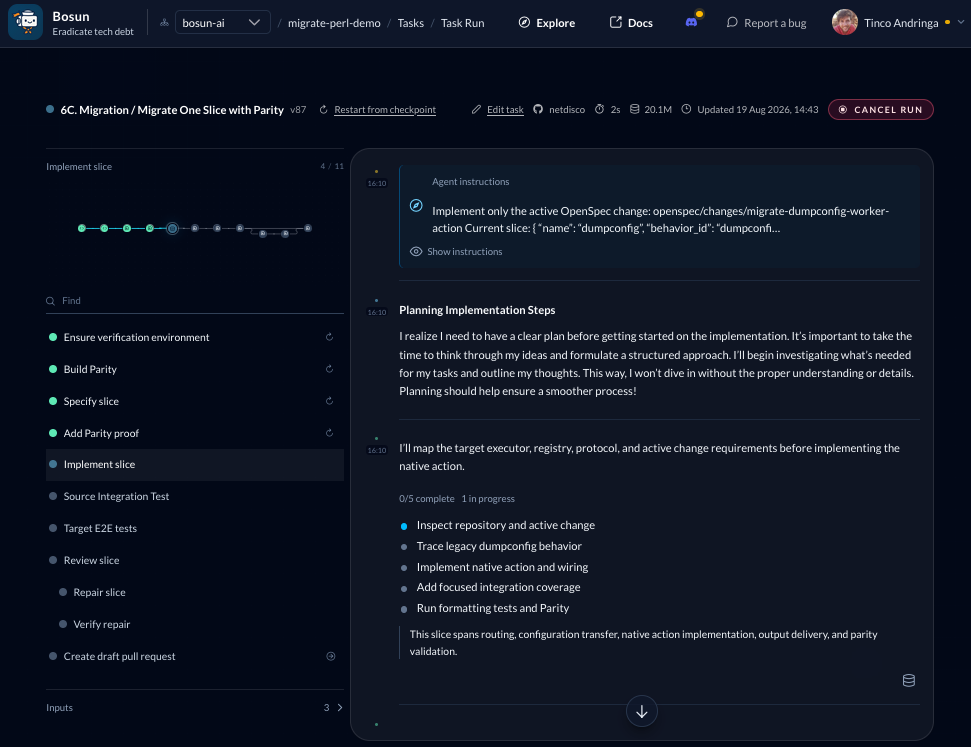
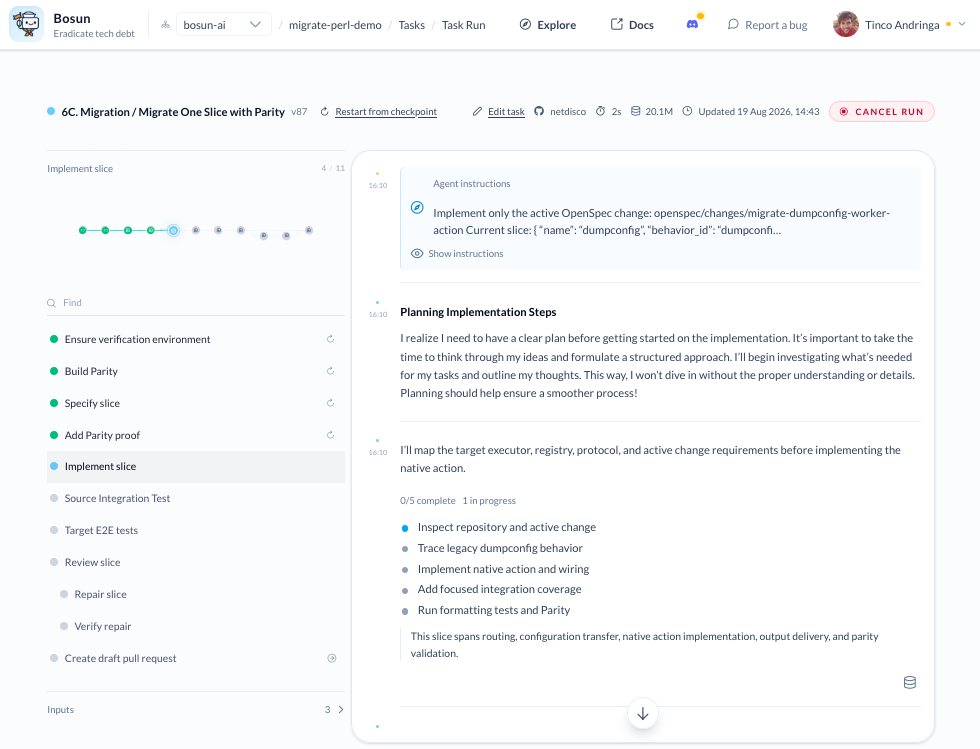
A Bosun task run part-way through an eleven-step migration slice, with the completed steps, the agent’s plan, and the run metadata visible.

An in-house agent for enterprise maintenance

Bosun has developed its own autonomous coding agent for software maintenance in large enterprise codebases. The agent keeps pace with the latest developments from OpenAI and Anthropic while staying adaptable to the models, infrastructure, and controls each customer requires.

Autonomous coding agent
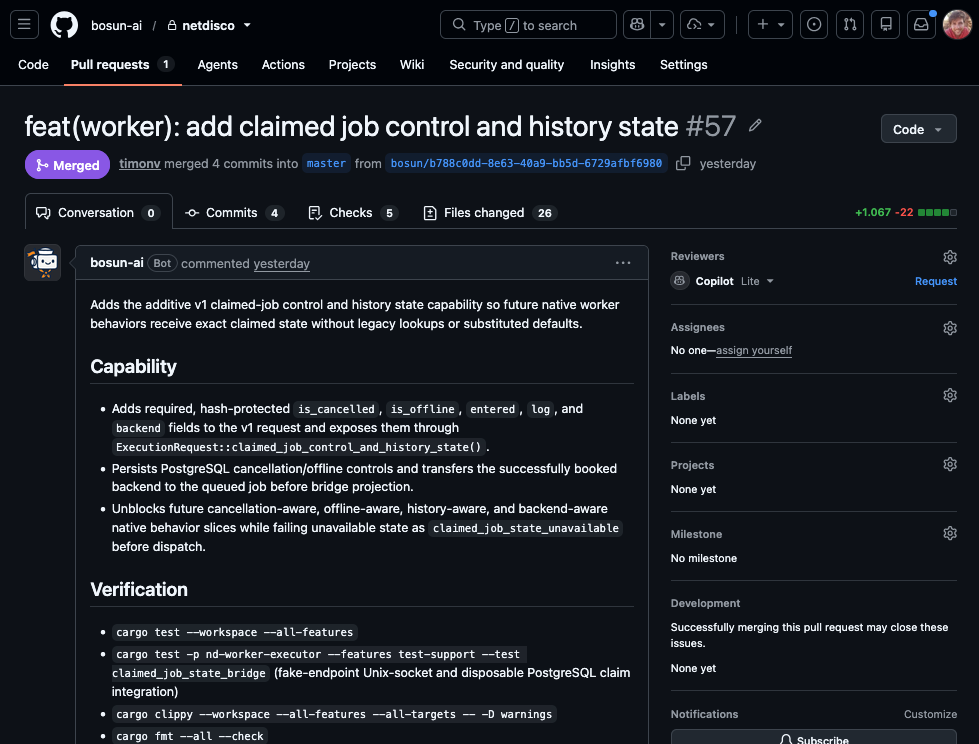
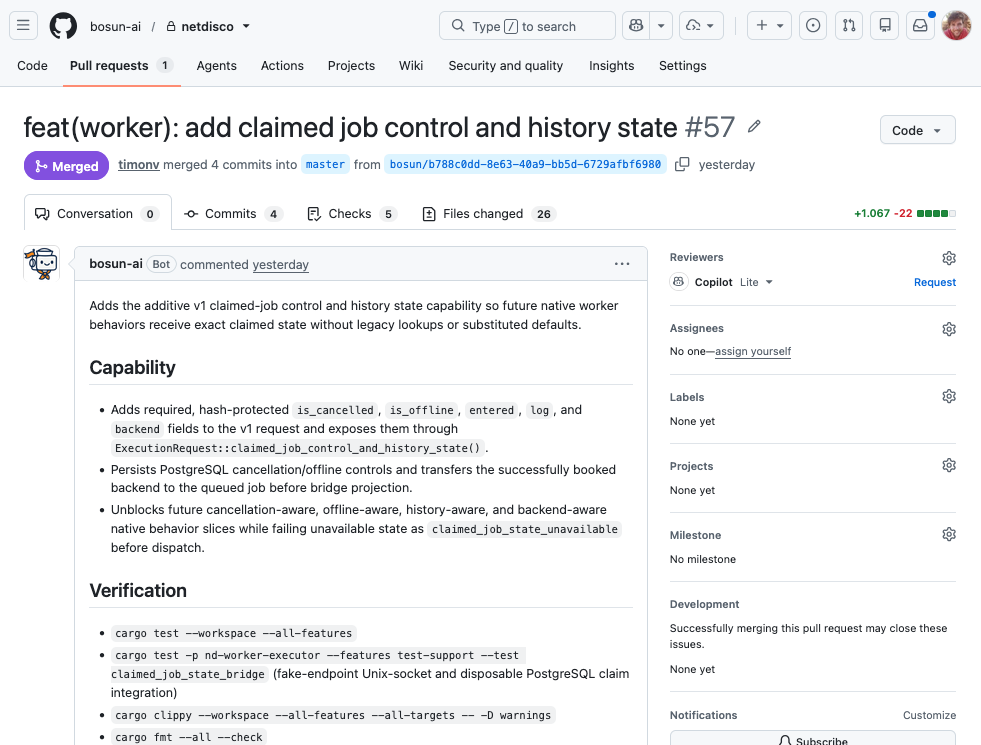
A merged pull request opened by bosun-ai, covering 26 files with passing checks and the verification commands the agent ran.

Turn maintenance into repeatable workflows.

Bosun lets teams compose agent steps, verification gates, and review handoffs into workflows that can run across services, repositories, and backlog categories.

Agentic workflows
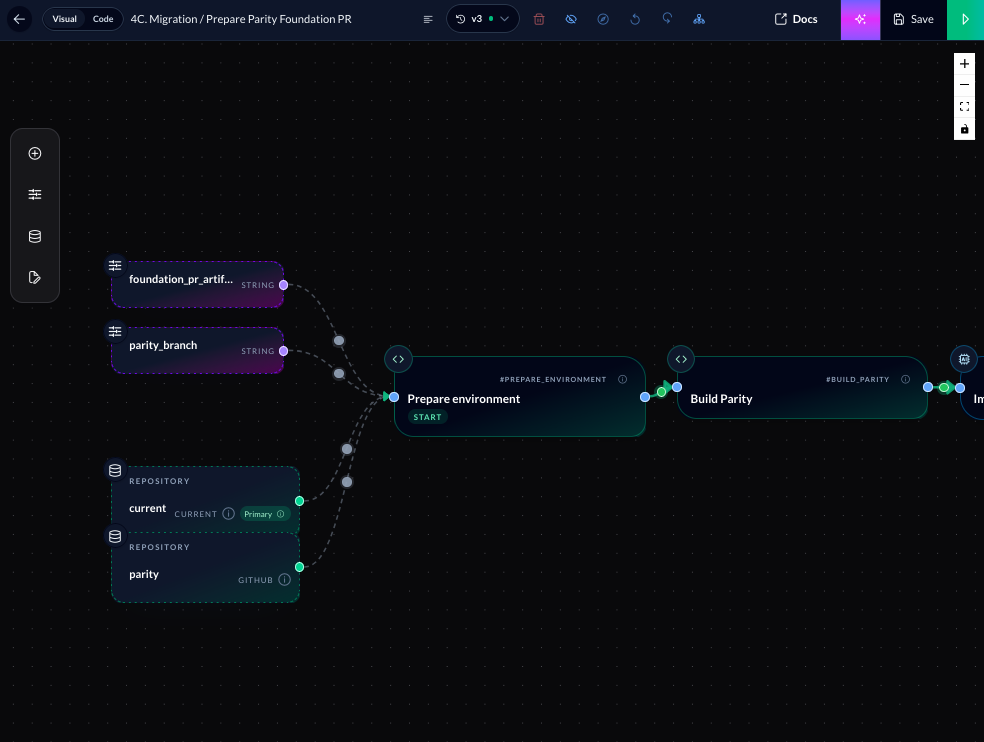
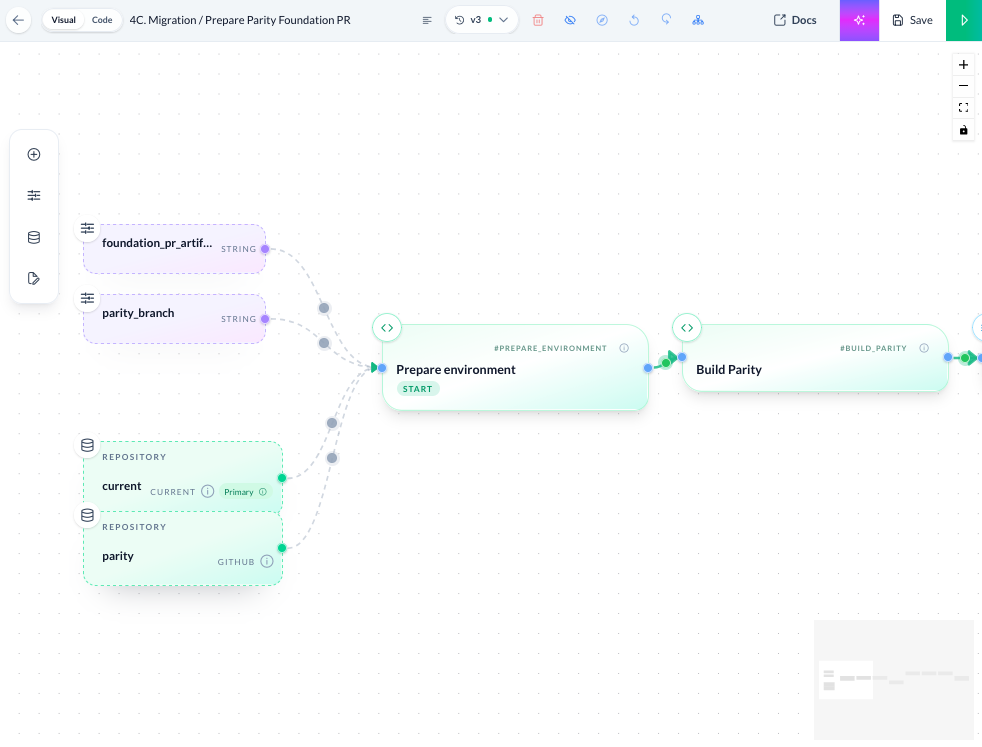
The Bosun workflow editor showing a migration workflow: repository and string inputs feeding a prepare-environment step, then Build Parity.
// automation process

From trigger
to review.

Define the task path, prepare the environment, execute the steps, and hand engineers a review package with evidence.

01Trigger
Start where work appears
Start from repository events, tickets, alerts, schedules, manual requests, or webhooks. The automation defines the steps, checks, permissions, and review handoff before execution.
02Context
Gather the engineering reality
Each run works with the repositories, dependencies, services, team rules, documentation, and previous decisions needed for the change.
03Execute
Run the defined steps
The automation inspects the codebase, applies the upgrade or refactor, runs the relevant checks, and records the decisions made during the run.
04Review
Review the evidence
When the task clears its gates, the automation prepares the pull request, artifacts, logs, validation output, risk notes, or hold reason.

Start with one
high-value automation.

Security
CVE remediation
with review evidence.
Turn advisories into structured tasks: analyze exposure, attempt the patch, validate the result, and open a PR or hold with a clear reason.
Modernization
Migration playbooks.
Repeatable tasks.
Convert framework upgrades, deprecated API changes, and frontend slice migrations into automations that gather context, change code, validate, and preserve reviewer evidence.
Pick the first maintenance task.

Tell us where required change is piling up: security remediation, dependency updates, migrations, CI triage, review, or production issues.

Get a demo
We scope the first automation with you.
Supported by